

Innovating for the Great Commission: Integrating AI and New Technology into Ministry
The Great Commission has always required tools, and I was to share at the ANAM 2026 Annual Missions Conference how agencies can adopt AI in a Christ-centered approach.
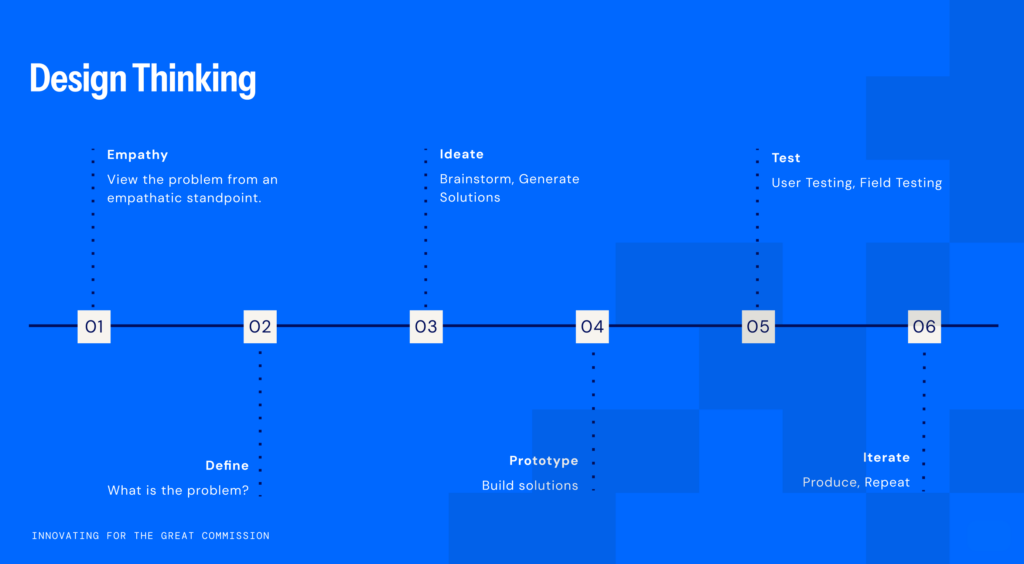
In this presentation I introduce AI resources and how your agency could integrate traditional methodologies for innovation through Design Thinking, while also adopting the FaithTech approach, which serves as the guardrails when innovation is happening so quickly. I also demonstrate what Vibe Coding is: the process of creating software, plugins, apps, and more through the use of AI, and how it can accelerate any workflow:
- Design Thinking helps to foster innovation.
- The FaithTech approach adds guardrails to tech and faith.
- Adopt technology. Don’t change the message.
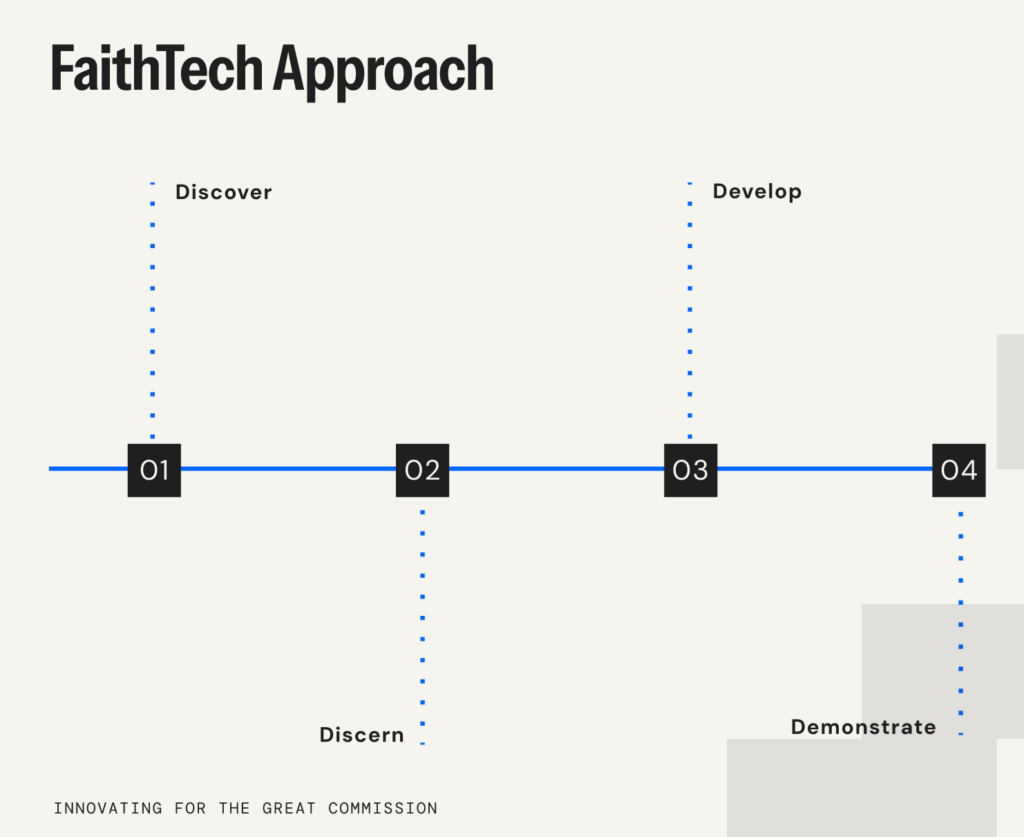
The Gospel of Jesus Christ is the same Gospel today as it was 2,000 years ago. We don’t need to update it or adapt it for cultural norms. The Church must adopt modern technology with clear, responsible approaches without ever changing the message of Christ. Just as Rev. Billy Graham leveraged television, or the Gutenberg press put the Holy Bible in ordinary people’s hands, we must do the same with the opportunities afforded to us in the Age of AI. Most importantly, we must keep a Human in the Loop, both from a Human-Computer Interaction standpoint and from a Christ-centered focus.

What does Human in the Loop mean? AI without human judgment is not a viable ministry strategy. AI tools will:
- Confidently produce incorrect information.
- Miss cultural nuances.
- Flatten complex individuals into simple categories.
- Optimize for measurable data while missing the sacred.
AI without human judgment is not a Ministry strategy. Ministry Strategy without the Holy Spirit is not Ministry
Case Study
I built a case study for this presentation that I’m excited to share, it builds on the idea behind CuratorOS, which I haven’t released publicly yet, but am very much looking forward to sharing. I added the “+” because let’s be honest, everything with a plus is premium these days.
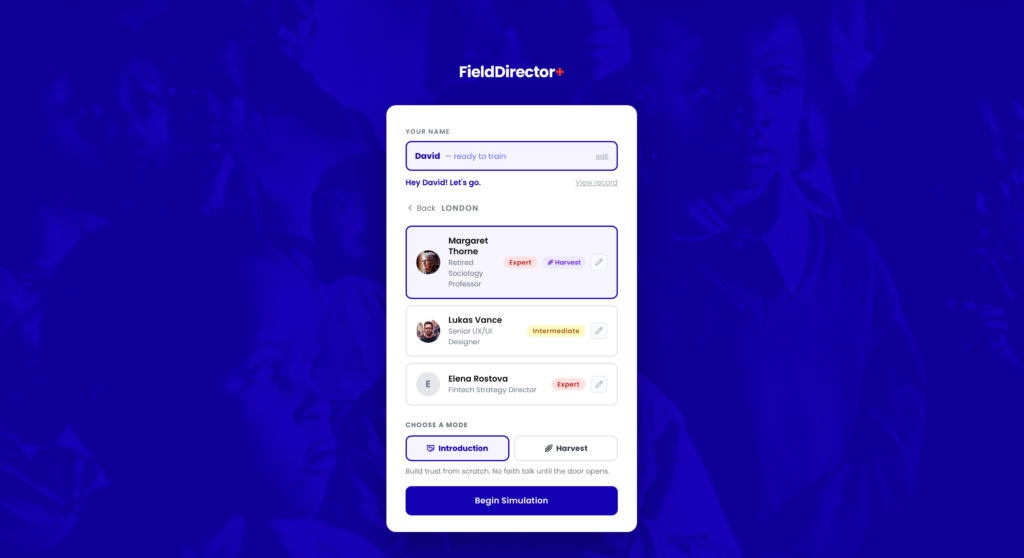
FieldDirector+ – please note this is still in development and not ready for field deployment. It should be used for research purposes only. The server takes about 60 seconds to wake up on first load. Enjoy!
Key Features:
- Realistic Personas: Trainees interact with AI contacts (ex. Margaret Thorne, a retired sociology professor in London) tied to real-world cities and specific resistance postures.
- Kill Switch: Each persona is loaded with one or more kill switches. If a trainee jumps ahead too quickly or leans on overtly Christian jargon, the session may end abruptly.
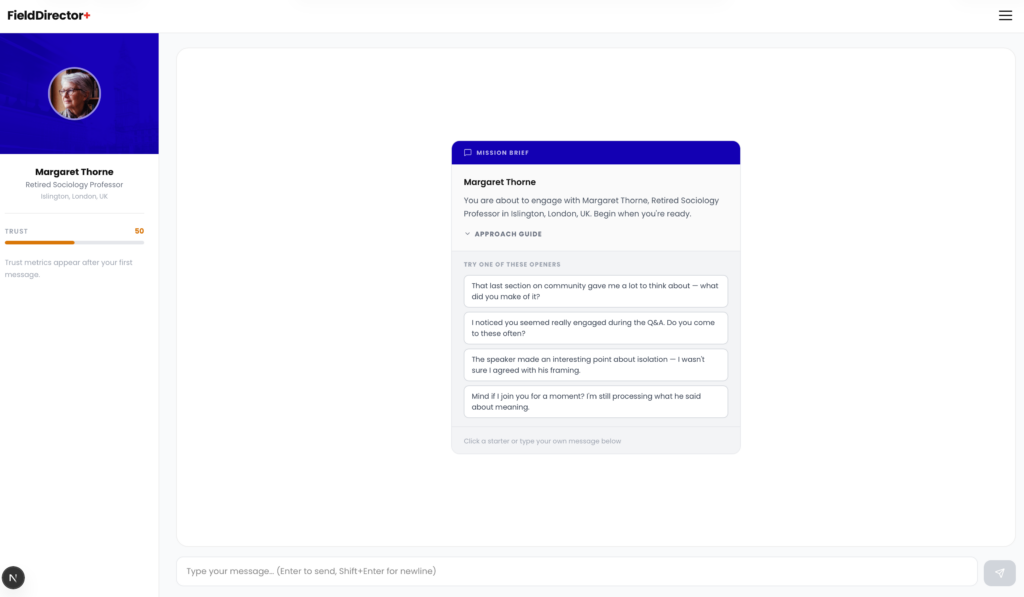
- Shadow Coach: An invisible evaluator scoring messages in real time across five dimensions.
- The Trust Algorithm: Measures five dimensions of engagement:
- Context: Acknowledging local and personal reality.
- Rigor: Meeting the contact at their intellectual level.
- Clarity: Avoiding insider jargon.
- Reserve: Showing patience and building trust before pressing an agenda.
- Boldness: Clearly stating a purpose once trust is established.
- Two-Phase Arc: Sessions move from an Introduction phase (building relationship) to a Harvest phase (applying things like The Four Spiritual Laws).
- Field Record: Automatically logs sessions, tracking completion rates and average trust scores to monitor trainee progress.
Tech Stack
- Frontend: Next.js / React
- Backend: FastAPI (Python)
- AI Engine: Gemini Flash (powers both the actor and the coach)
- Storage: Local JSON and localStorage
Key Resources & Tools
- Innovating for the Great Commission – Innovating for the Great Commission Presentation
- Google AI Studio – For rapid prototyping and prompting.
- Google Labs – To explore the latest experimental AI features.
- Firebase Studio – AI-integrated backend development.
- Eloquent JavaScript AI – Specialized edge AI documentation.
- Pomelli – Creative AI workflows from Google Labs.
- Claude AI – For advanced reasoning and long-context tasks.
- Apple Xcode – Core environment for native AI integration on macOS/iOS.
- Google NotebookLM – An AI-powered notebook for synthesizing and grounding insights in your own documents.
Click below to Access the FieldDirector+ and the NoteBookLM Examples. Remember to allow for about 60 seconds for the servers to fire up on FieldDirector+